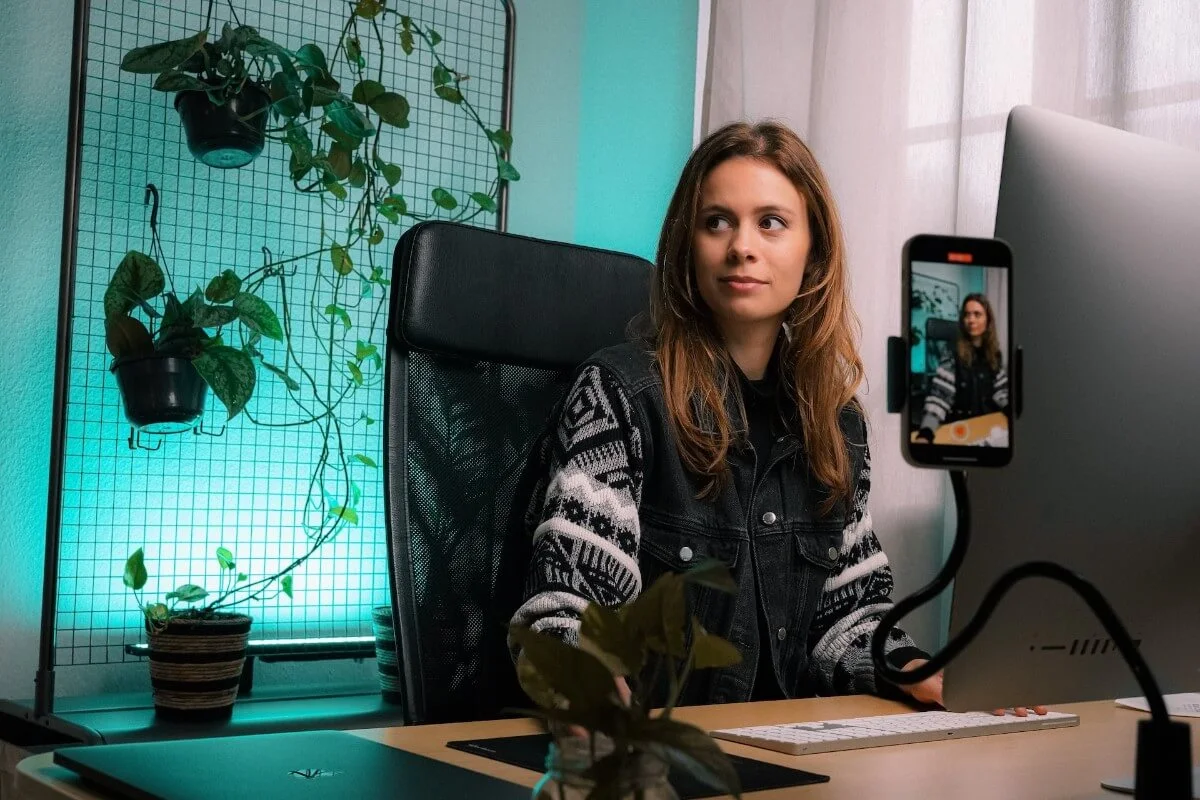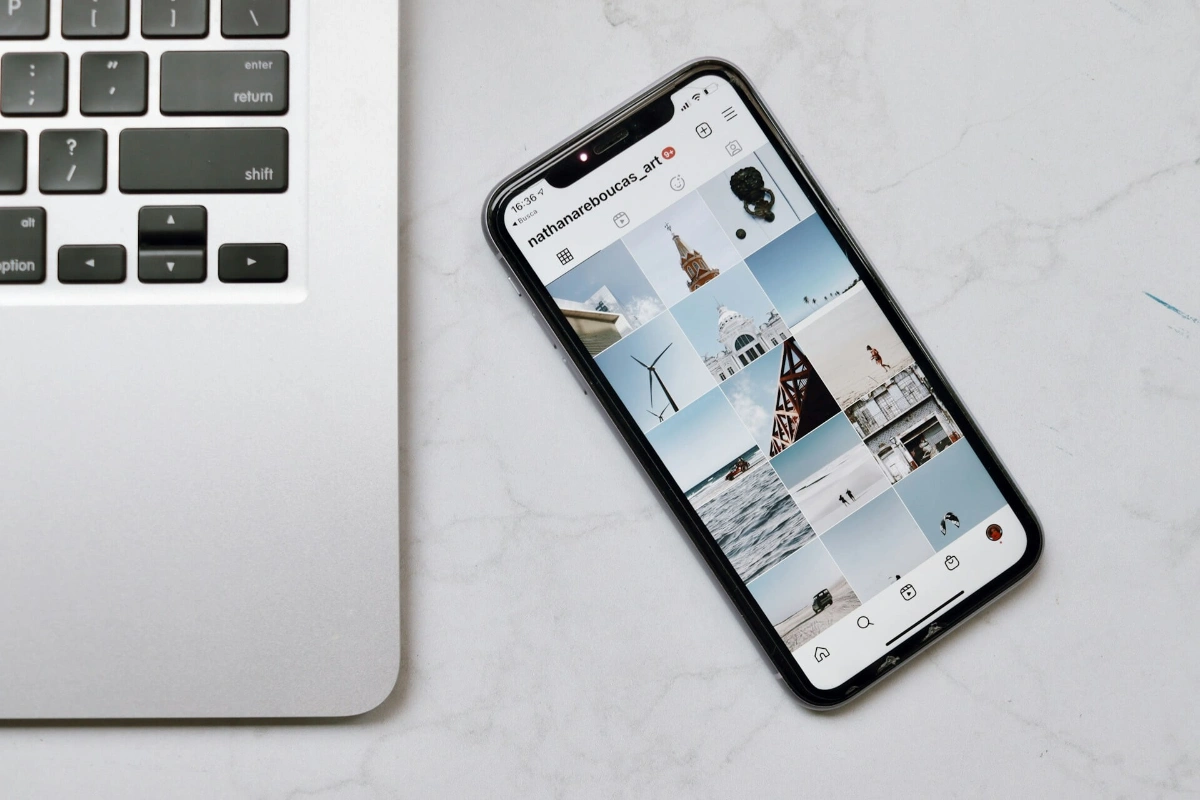
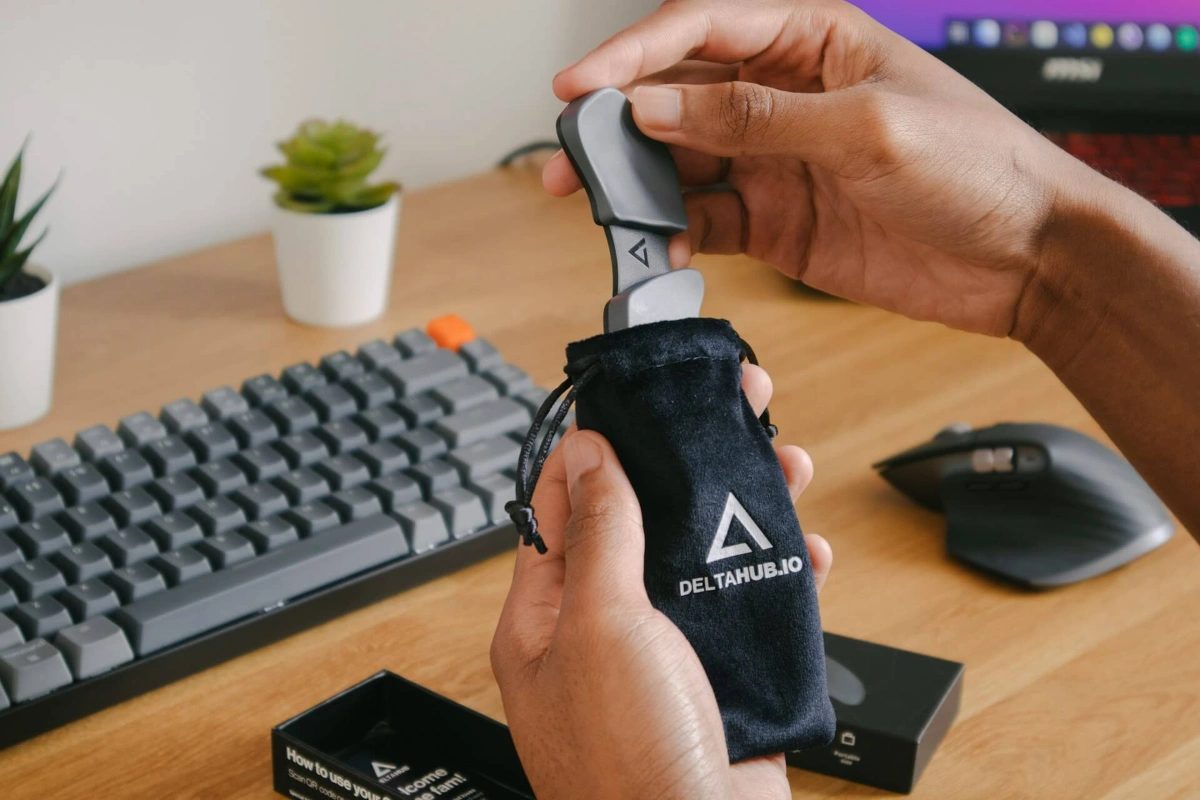
As you will have read in other articles on our site, UGC creator is a fast-growing profession.
A great many companies — large brands and small local businesses alike — are choosing this kind of content because it feels more authentic and closer to the end customer, which lifts both engagement and conversion.
At the same time, the term itself tells you the job is open to anyone reasonably comfortable with video editing and the main platforms where content gets published.
UGC stands for user generated content, and it does not refer to promotional videos produced by companies but to the ones made by ordinary people like us, in a semi-professional way.
That word — semi-professional — makes the point immediately: the content may look homemade, but it still has to be watchable. Audiences are used to Netflix picture quality and very clean audio.
So if you want to become a UGC content creator you need the right equipment to produce content of decent quality. In this article we will go through the devices and accessories that belong in a UGC creator's toolkit.
A smartphone that films well
If you plan to work mainly on short-form content for Instagram and TikTok, a smartphone with a very good camera is the bare minimum.
There are models at every price point. What matters is looking carefully at video recording quality and camera resolution, usually quoted in megapixels.
Be sceptical of manufacturer marketing. Phones advertising 200 MP cost a lot and are not always better: that figure is often the combined resolution of the three or four cameras on the back, and it pushes the price up without necessarily improving your footage.
Good options at a slightly lower price point include the Xiaomi Redmi Note 12 Pro, and from the same maker the Redmi Note 11 Pro and the 12T Pro.
A step up you will find the Huawei P50 Pro, Google's Pixel 7 (well worth it for the camera alone) and the Realme GT 2 Pro.
If budget is not the constraint and you want something at the top end, look at an iPhone 14 with its 48 MP main camera, or a Samsung S23 Ultra.
As you can see, the spend runs from roughly €300–400 up to around €1,400.
Choosing between Android and iOS is entirely personal: if you edit on a Mac (more on computers below), an iPhone makes life easier; if you work on Windows, Android does.
The professional camera
Things get slightly more expensive if you decide to make videos for YouTube. A phone is still enough, but it is worth buying a proper camera to raise the quality of your footage.
These cameras typically give you a recording resolution above 20 MP. The best reach 33 MP — the Canon M6 Mark II, for instance.
They also let you shoot in 4K, include built-in image stabilisation that cleans up every frame as you shoot, offer a flip-out LCD screen so you can see what you are filming in real time (invaluable when you are the one on camera), and have a dedicated input for an external microphone.
The spend rises here, though you can still get a solid body for a little over €600.
If you would rather not spend much at the start, consider a Sony ZV-1 or a Canon EOS M50 Mark II.
If you want the higher-resolution end straight away, look at the Panasonic Lumix GH6, the Fujifilm X-S10 or the EOS M6 Mark II mentioned above.
This is also a purchase you can postpone to a later stage of your career, when you need more professional kit to film on a client's premises.
The lavalier microphone: a timeless classic, convenient and effective
With video covered, let us move to capturing sound. A good smartphone — always the starting point, as we said — records audio reasonably well, but it is still worth buying at least a lavalier microphone.
This is the small clip-on microphone you see fastened to a television presenter's jacket.
Prices vary, but for under €50 you can get a convenient wireless mic that connects straight to your phone through its own transmitter.
A cheaper route is a wired lavalier, at the cost of the freedom wireless gives you.
Our advice: since the outlay is small either way, go wireless. It will be your travelling companion on every shoot you do.
The vlog microphone: essential for podcasts and YouTube videos
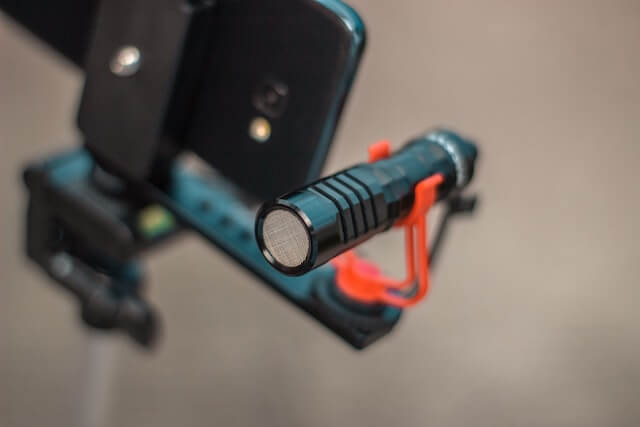
If you want something better suited to product and service reviews that involve demonstrations and screen recording, a vlog microphone is the right choice.
You know those YouTube channels publishing tutorials and software demos, where the presenter's screen is recorded and their face sits in a small window in the corner?
You will have noticed they use a microphone that looks like the ones in radio studios. That is the vlog microphone, and it is perfect for this kind of content.
Prices are very accessible here too: a good one costs a little over €60.
Tripods for phone and camera: which one to choose?
It is also worth remembering that when you film properly you cannot simply hold the phone in your hand, the way you would filming a story on your personal Instagram.
And because this is UGC, there is almost never someone else behind the camera. You need a mount that holds your phone or camera steady, so it does not wobble and drag your video quality down with it.
If you have bought a ring light, it usually comes with a holder for your camera or phone.
If instead you want the device somewhere other than on the ring light, a tripod is the answer.
For a phone, a good tripod costs around €25; for a camera the price climbs to just under €50.
In some cases a selfie stick is worth having too, particularly if you shoot outdoors for travel and hospitality brands.
There are also flexible-leg tripods, made for travel creators who want to anchor a device to a tree, a wing mirror, bike handlebars or a lamppost.
The ring light: the right tool when you are the one on camera
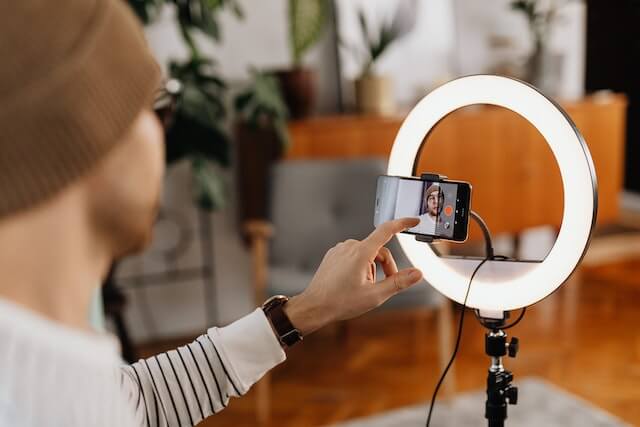
Now that sound is handled, it is worth recognising that you cannot always film in natural light.
You might be shooting at home, where the light comes from a single window and works against you, or in a room that is simply dark.
In that situation, whether you shoot on a camera or a phone, you want a ring light within reach.
It works through a simple circular LED, and most models let you adjust the intensity of the beam and its colour temperature, so you can make the room feel cooler or warmer as needed.
Cost depends on the model, with prices ranging between €30 and €100.
If you are the subject of the UGC and want an efficient setup, choose a ring light that lets you mount your phone or camera in its own bracket.
Lighting a room: why COB lights matter
Things change when you are filming professionally at a client's premises, capturing rooms and objects rather than yourself.
There you want to build a small set and light it with two COB LED lights.
COB stands for Chip On Board and describes an LED light with the chips along the edge, so the panel producing the beam lights evenly.
They usually take the form of a small square panel. For a properly professional kit we suggest buying one 200W COB LED and a smaller one around 60W, so you are equipped for any room you walk into.
Depending on brand, model and output, expect to spend between €40 and €80.
The computer for editing
The second-to-last item in the UGC creator's toolkit is the computer that lets you edit your video (and clean up the audio) before delivering to a client or publishing on your own channels.
Engaging editing, subtitles where they help, small graphics that make the content easier to follow — a computer gives you access to the software a UGC creator cannot work without.
There is no one machine built for this profession; plenty of manufacturers make hardware that handles the job.
If you go for a laptop running Windows, our advice is a recent Intel i5 (or AMD Ryzen) processor, better still an i7, a 1TB drive, 8GB of RAM (16GB is better) and at least a 128GB SSD for the operating system, which is what keeps everything feeling fast.
Alternatively, if you can spend more and want a machine dedicated entirely to the work, a 13" MacBook Air or MacBook Pro is the better buy. The performance will justify the investment over time.
The UGC creator's backpack
The last accessory, essential the moment you film anywhere other than home, is a bag that carries everything you have bought to a client's site.
Here you need to think about capacity (usually given in litres), enough for the laptop, the camera and all your accessories. Check how solidly built it is, how comfortable the straps are, and how well it absorbs knocks.
Those things ensure every piece of kit has its own place inside the bag and is protected from accidental impact on the way.
The spend is modest here as well: there are very capable backpacks starting around €40.
Now that you know what equipment you need, all that is left is to start building it up.
One last piece of advice: if you cannot afford all of it at once, don't worry. Start with what you need to shoot your first content, and once you have more clients and higher rates you can add the rest and keep raising the quality of your work.