
Did you know that more than 90% of people trust user generated content more than an ad from an online advertiser?
That is exactly why, over the last few years, brands of every size have built UGC into their marketing strategy. In some markets it is still an evolving practice; in the United States it has been standard for years.
UGC, as this survey on trust and loyalty in ecommerce shows, is fundamental to raising trust in a brand and the conversion rate of ad campaigns — for online stores, for lead generation and for local businesses alike.
It is also worth noting that UGC is rewarded organically by the platforms themselves. If you have been paying attention, Instagram, Facebook and TikTok have been giving far more reach to posts, stories and Reels featuring people than to static images of objects.
Reading that, you may already be thinking about a strategy to get UGC from your own customers organically, without hiring professional creators. Don't worry: we have written a separate article on exactly that, full of practical ideas.
But this content can give your business a serious push not only organically — it also works inside paid ads. It performs especially well when you use UGC in video format, so in the next sections we will walk you through everything you need to put it to work in your online advertising on the major platforms.
What are UGC video ads?
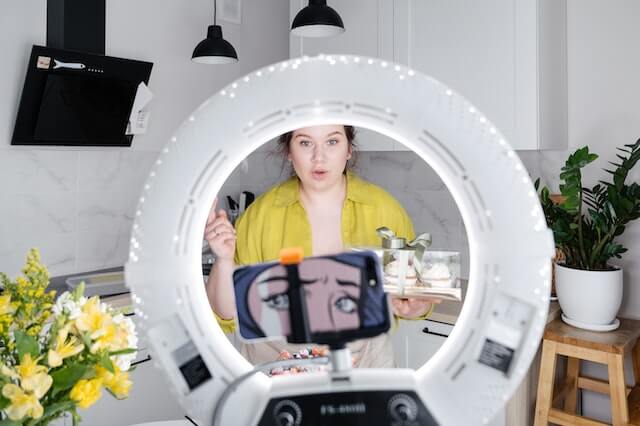
Ads built on user generated content are a form of advertising that uses videos and creatives made by users rather than by the brand running the campaign.
Video is the format that works best, because it drives a higher engagement rate — as this comparison of videos and images in Facebook ads also found. In practice, a video holds people on the screen for more seconds, focused on content that should be laying out the main benefits and what buying the product was actually like for the person on camera.
UGC advertising is most popular on the platforms where video travels: Instagram, Facebook, TikTok and YouTube, where people are often already making this kind of content on their own to share with their followers.
Why you should use UGC videos in your pay-per-click campaigns
If the content was already published by users with a decent following, the reason is straightforward: this form of advertising lets you extend your reach to new audiences you had not touched before.
The authenticity of the content, a face that a particular niche already knows, and the originality of documenting a real purchase in a way that looks nothing like manufacturer advertising, all make the video work harder.
If you want the full picture of what UGC can do for your business, we recommend reading this article as well.
You should also bear in mind that advertising on social media and YouTube is paid per view (or impression).
People have become very good at recognising advertising — helped by the labels the platforms themselves apply — and very often they scroll straight past. This is not a reason to replace your marketing team or fire the designer making creatives in Canva: the problem is that audiences have developed a kind of immune response to advertising.
By contrast, people do not immediately register an ad built on UGC showing an ordinary person talking about their purchase, doing an unboxing, or demonstrating what a product does. In that moment it reads like a friend's post, or something the platform surfaced because it matches their interests — so it earns a few more seconds of attention.
As you would expect, a UGC video with good editing and a compelling delivery will outperform classic advertising.
The last factor is ad relevance and engagement, which help bring down your cost per impression and with it your cost per conversion.
Because UGC is almost indistinguishable from an organic post, it generates likes, comments and higher view-through rates — and those are meaningful signals to every video platform. They reward your ad with a better score and cheaper views.
Now that it is clear how valuable these user-made video ads can be, let us look at how to use them, with practical strategies that produce results quickly.
How to get UGC videos for your campaign
Before you build the campaign and start running video ads based on UGC, you need material to work with.
For good footage, you can ask your regular customers to film video testimonials, reviews and clips talking about your product or service. In this case the selecting and editing will usually fall to you — though you save on production cost.
If you have no time to lose and want to start now, you can bring in a professional UGC creator to make exactly the videos your campaign needs.
Either way, remember that this is content produced by people outside your company, so you need written permission to use it in a campaign that will run publicly, and often across borders.
Good practice, especially with content you received for free, is to credit and thank the person who made it — which encourages the rest of your customers to make more of it in exchange for visibility.
Using UGC videos to reach a new audience

Let us look at how to put the UGC videos you have gathered to work in your marketing.
The first approach is to go after an audience you have not reached so far, which works particularly well when the person supplying the video already has their own channel and following.
Build the campaign around their videos and target the interests of the niche that currently follows that creator.
Alongside it, run a campaign from their account too, with a referral link, so that purchases and conversions coming from that third-party source can be tracked.
The critical part here is the kind of video you use: it has to be easy to watch, it has to reflect the personality of the person on camera, and it has to do your product justice at the same time.
Use content made by UGC creators on their own channels, and make sure it highlights the benefits, the features and how the product works, along with their personal opinion both on the product and on the buying and unboxing experience — that is what brings it close to the person watching.
A face that only one niche recognises will move that niche far more than traditional advertising ever will.
In some cases a good strategy is to edit the footage into the classic "before and after" structure. Be careful here: Meta has very specific policies on this, so we suggest testing your campaigns on a spare account first to avoid getting blocked.
If instead you have a set of clips from your actual customers, you do the same thing — without the referral links and third-party channels.
Adding a few UGC ads to a campaign that is already running
Here we are talking about a conventional ad campaign that already has image and video creatives and is producing conversions and sales.
This situation is considerably easier, because your account has already accumulated a lot of data on audiences and interests that you can put to work.
Using UGC video here means doing something very simple: add ads, with their own budget, to your existing ad sets and let them run alongside everything else.
The people you are targeting will then see not only your traditional advertising (which was already converting reasonably well) but also videos made by real users or UGC creators.
You can always use material made specifically by professional UGC creators, but in this scenario we strongly suggest leaning on video testimonials from satisfied customers, interviews and success stories from people who bought your products — and, of course, the classic unboxing, which works very well for ecommerce.
Within a short time you will see your campaign performance improve noticeably, for two reasons. The first is the conversion rate, which rises and therefore drops your cost per lead or per purchase. As we said earlier, people trust UGC more than advertising, so they are more likely to click and move further down your funnel.
The second, less intuitive but already mentioned above, is how the platform judges your account. Content made by real people generates views, comments and interactions, and you get rewarded with a cost per impression that falls over time — which pulls the cost per conversion down with it.
UGC and YouTube: using it in the ad groups shown to your audience
Compared with Instagram and Facebook, where campaigns are managed fairly intuitively in Meta Business Manager, and TikTok with its own business manager, things get slightly more complicated on YouTube.
To run campaigns on YouTube you need a Google Ads account, where you will choose video campaigns (or Performance Max, though let us stay with video to keep it simple).
Here too you can choose who sees your ads based on their interests, or target people who have visited particular websites. Google Ads, properly connected to GA4 on your site, offers better functionality than Meta Business Suite — it is simply harder to use.
Back to the point: before you build the campaign, understand that your video ads will appear as an interruption in front of someone who came to YouTube to watch something else.
Your goal is to get that person to act, which means keeping them on the ad instead of hitting "skip" in the bottom corner. How?
The method is simple but takes work. First, get the campaign setup right by choosing an audience that actually matches what you are promoting.
Then the video itself, which cannot be the "amateur" kind your customers might film. You need effective editing, a deliberate message designed to interest a potential customer while not looking like pure advertising, and genuine production quality.
That last point is decisive. Picture someone watching a holiday destination in 4K, a professionally produced podcast, or a high-quality music video — and then being interrupted by a person filming handheld on a phone, with poor picture and sound and a weak message. The result? Your UGC video will never work.
To use user generated video in YouTube campaigns you need experienced creators who can make content suited to the platform, watchable for your audience, delivering a call to action without selling shamelessly, while still looking like it was made by an ordinary person.
All of it has to be well made, so it does not jar against the Netflix-grade video the viewer actually came for.
Get that right and the result is striking: below-average costs thanks to high watch time, which the platform rewards with more visibility. If the message is clear, the conversions follow.
Retargeting on YouTube, Facebook and Instagram
Once your campaigns on YouTube and your chosen social channels are running and optimised, there is one more way to use UGC video in advertising.
If you already have a customer list, and perhaps a strategy built on a low-cost front-end product followed by an upsell, UGC videos work in the retargeting phase too.
The type of content is the same as before, with one difference: you are talking to people who already know you, who have bought something from you, and who now need convincing to take the next step, trust you further and spend more.
For that reason testimonials and case studies are the strongest content you can use here — better still if they are original and unpolished.
You can use the standard retargeting tools in Meta, or Google Ads with Customer Match, to put UGC videos about the product or service you want to upsell in front of existing customers. Here too it will outperform traditional advertising.
And don't forget email and your direct channels: UGC videos work there too, building loyalty, trust in your brand and, as a result, your conversion rate.
One last tip: some CRMs and email marketing platforms — Keap, ActiveCampaign or ConvertKit, for example — let you manage through their API which ads appear in your chosen ad network in front of which customer, almost surgically.
ActiveCampaign and ConvertKit are cheaper and cover Meta's ad network, while Keap costs more but gives you the most control, including Google Ads integration for retargeting with UGC on YouTube.
Now that you understand how to use UGC in organic strategies as well as paid ones, all that is left is to get to work: gather the material you need and build the ads that will lift your sales and your conversions.